JETRO J-StarX @ Stanford / d.school
Stanford Student Innovator Course (2nd cohort) & Design Thinking Bootcamp (44th cohort)
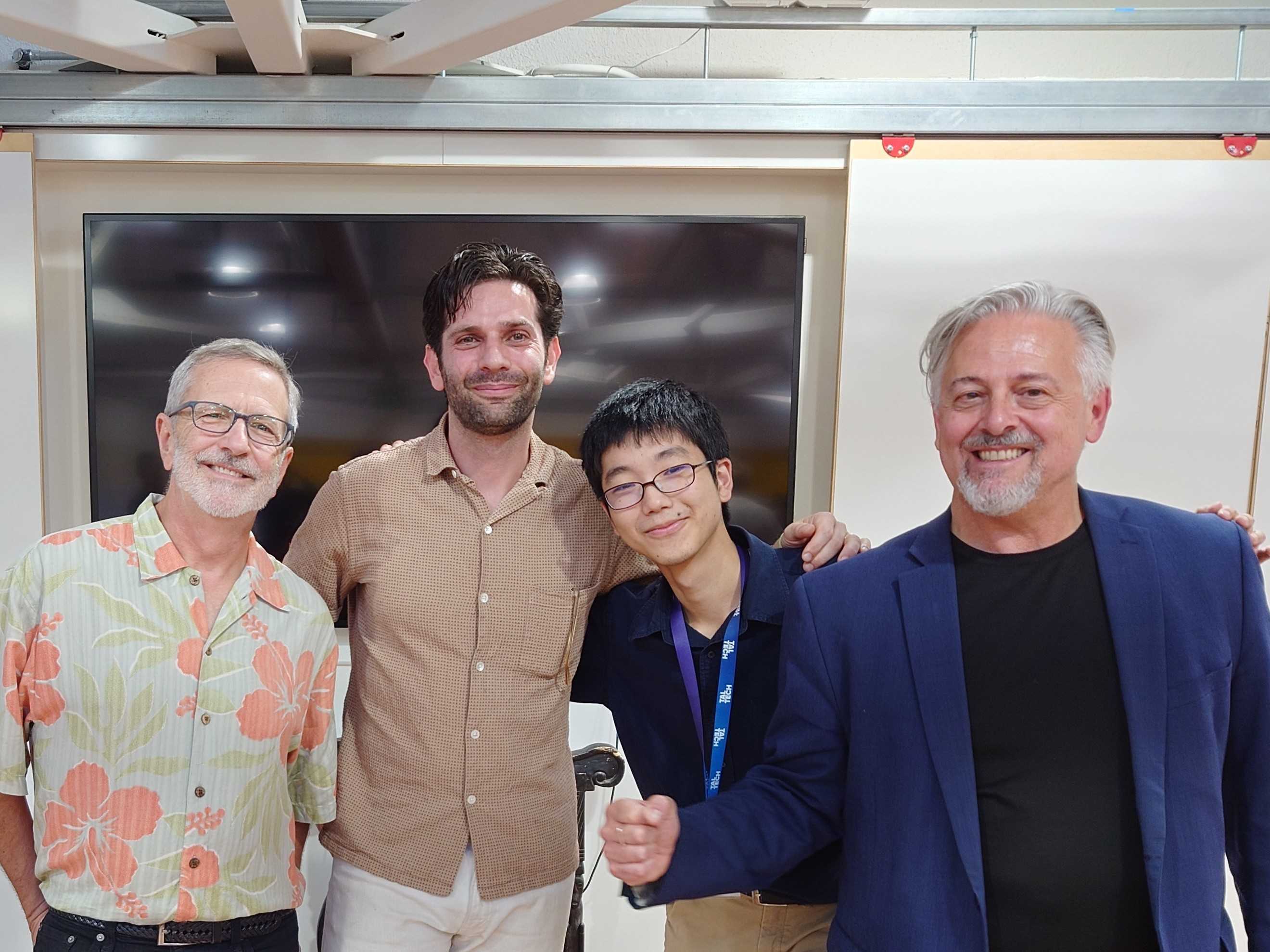
- Selected for the JETRO J-StarX Stanford Student Innovator Course (2nd cohort)
- Completed the Stanford d.school Design Thinking Bootcamp (44th cohort)
Overview
As a member of the 2nd cohort of the J-StarX Stanford Student Innovator Course, JETRO’s entrepreneur development program, I stayed in Silicon Valley for three weeks from August 2024. I completed the US Market Access Center (USMAC) bootcamp and the 44th cohort of the Stanford d.school Design Thinking Bootcamp. My aim in joining was to learn about the US market and design thinking in person.
Activity log
I applied in the first half of 2024 with Alnilam as my subject.
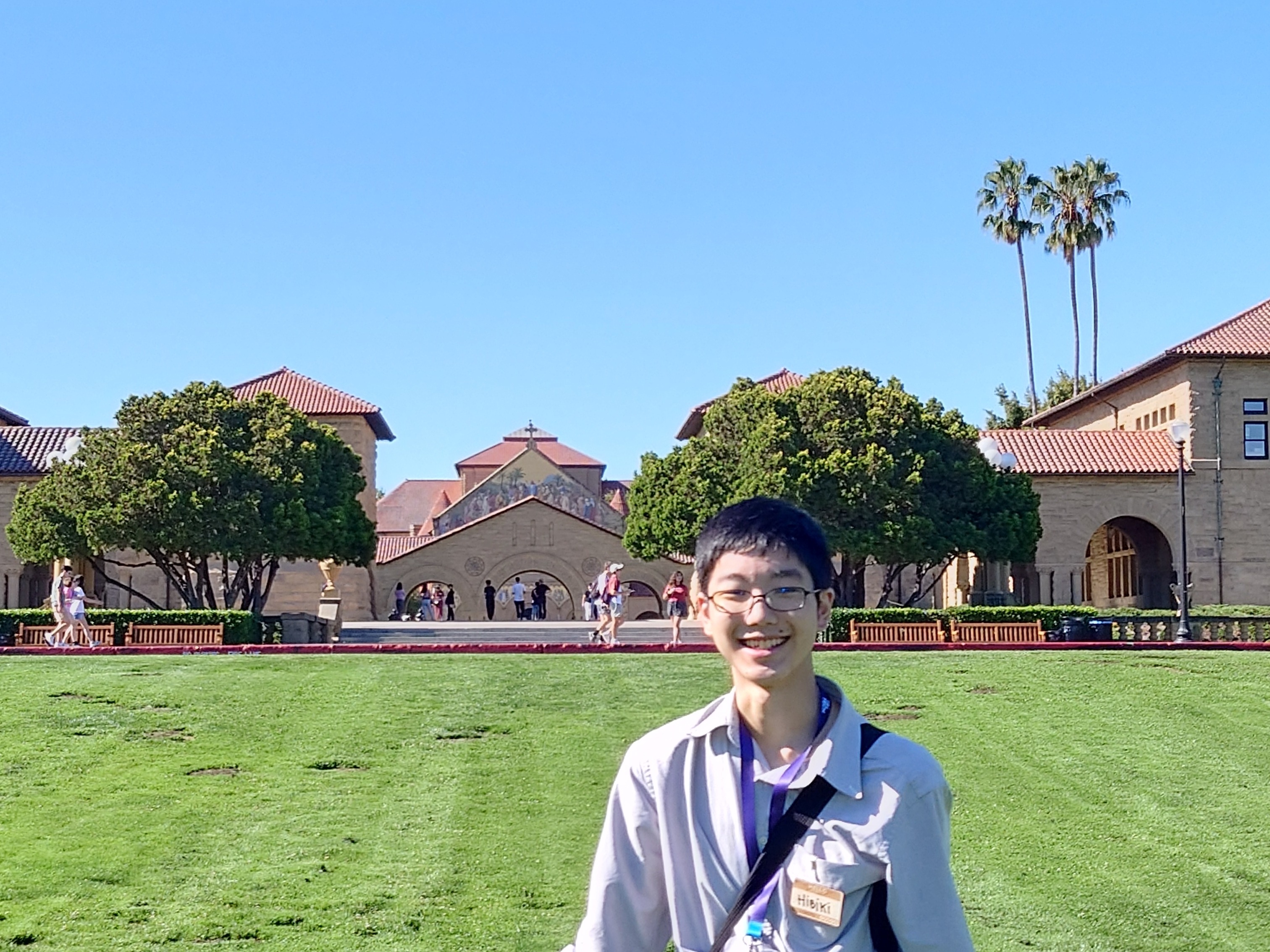 Group photo with the program participants and instructors
The first week on site was a run of daily lectures on the history of Silicon Valley and its startup culture. Why does this place keep producing companies? How do investors, universities, and corporations feed into one another? I had read about this ecosystem in Japan and thought I understood it; the program began by having me relearn it from local instructors.
 Lunch with participants and instructors
What also hit home was how thoroughly the local instructors had studied Japanese people. Hand a Japanese person an A4 sheet of paper without a word, and almost 100% of them will use it in portrait orientation. In the lectures, behaviors like this were predicted one after another, and we were repeatedly played right into their hands. On top of that, quoting the Japanese expression “reading the air,” they taught us to be people who rewrite the air.
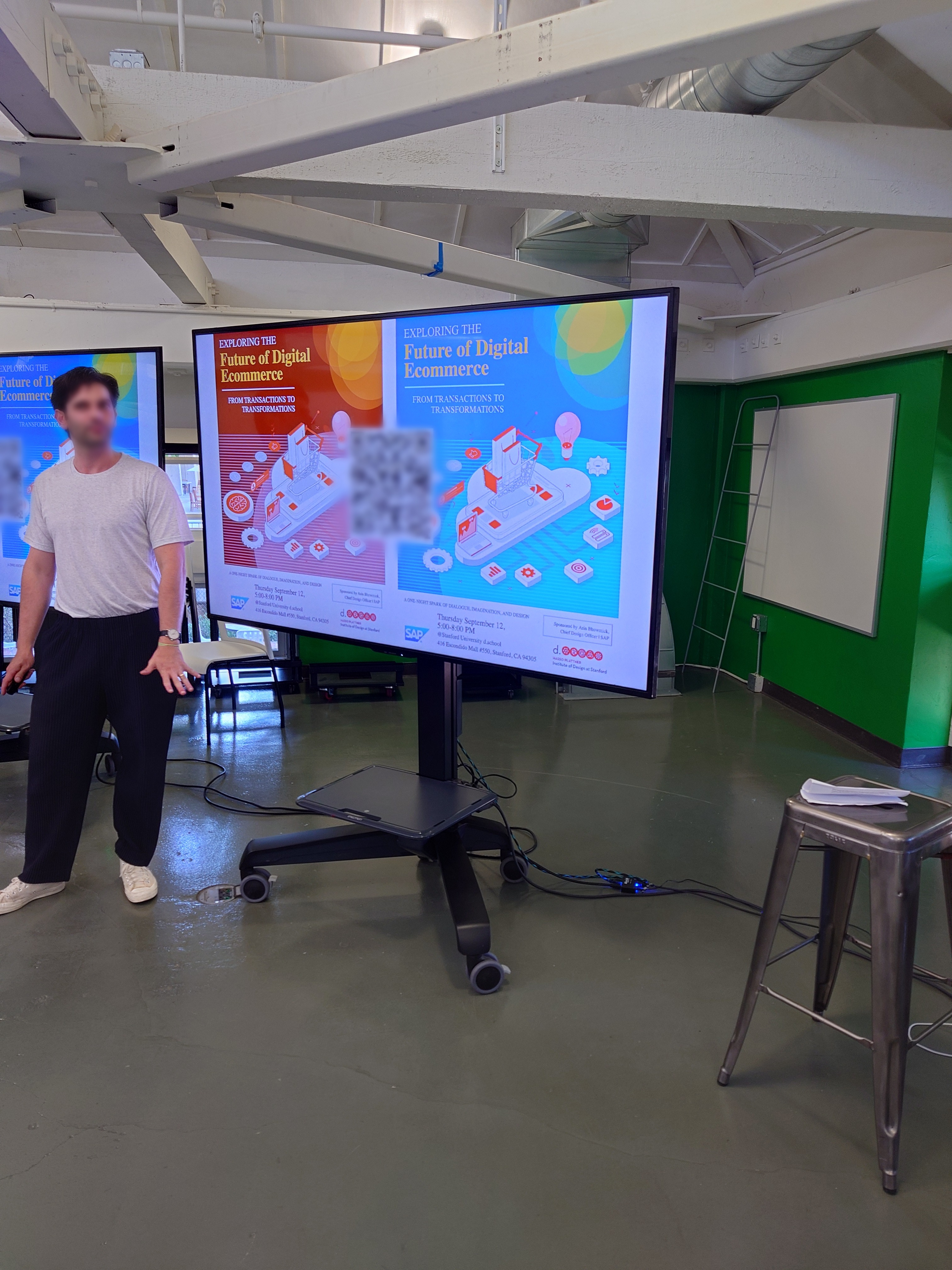 Breaking down a business model around a whiteboard
In the middle of the program, we worked on Lean Canvas and Value Creation exercises. I took the business model of Alnilam, which I had brought as my sample, apart and rebuilt it over and over, and finally wrote up a Value Creation Thesis in English.
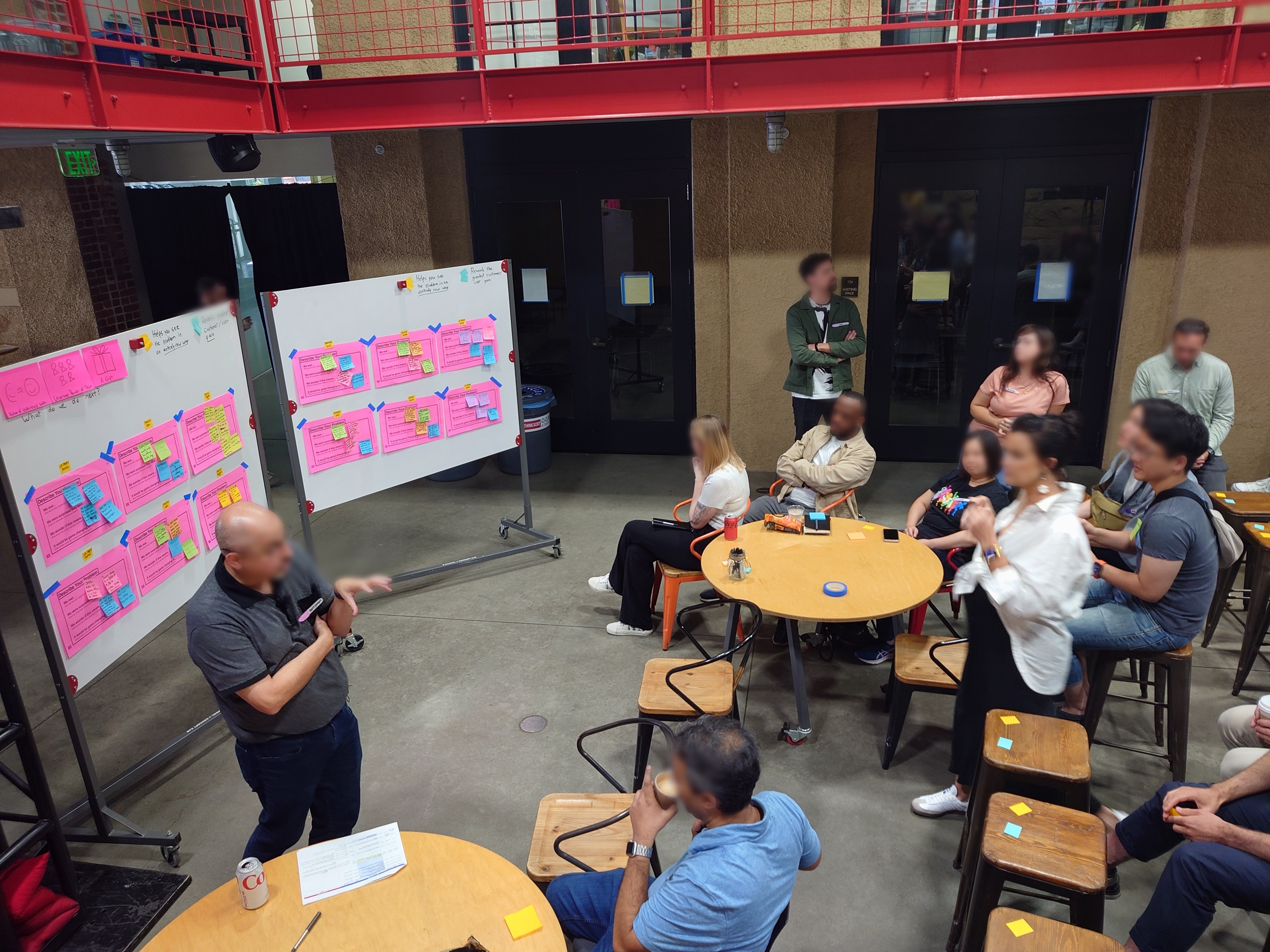 Presentation practice
The final stretch was the week for facing investors. In a Q&A session titled “Investors Have Questions,” questions from angles I had never anticipated left me stuck for an answer again and again. After repeated rounds of no-slide pitch practice, presenting without any slides, I delivered a pitch in English as the culmination. That pitch was, almost uniquely in the entire three weeks, work that earned high praise.
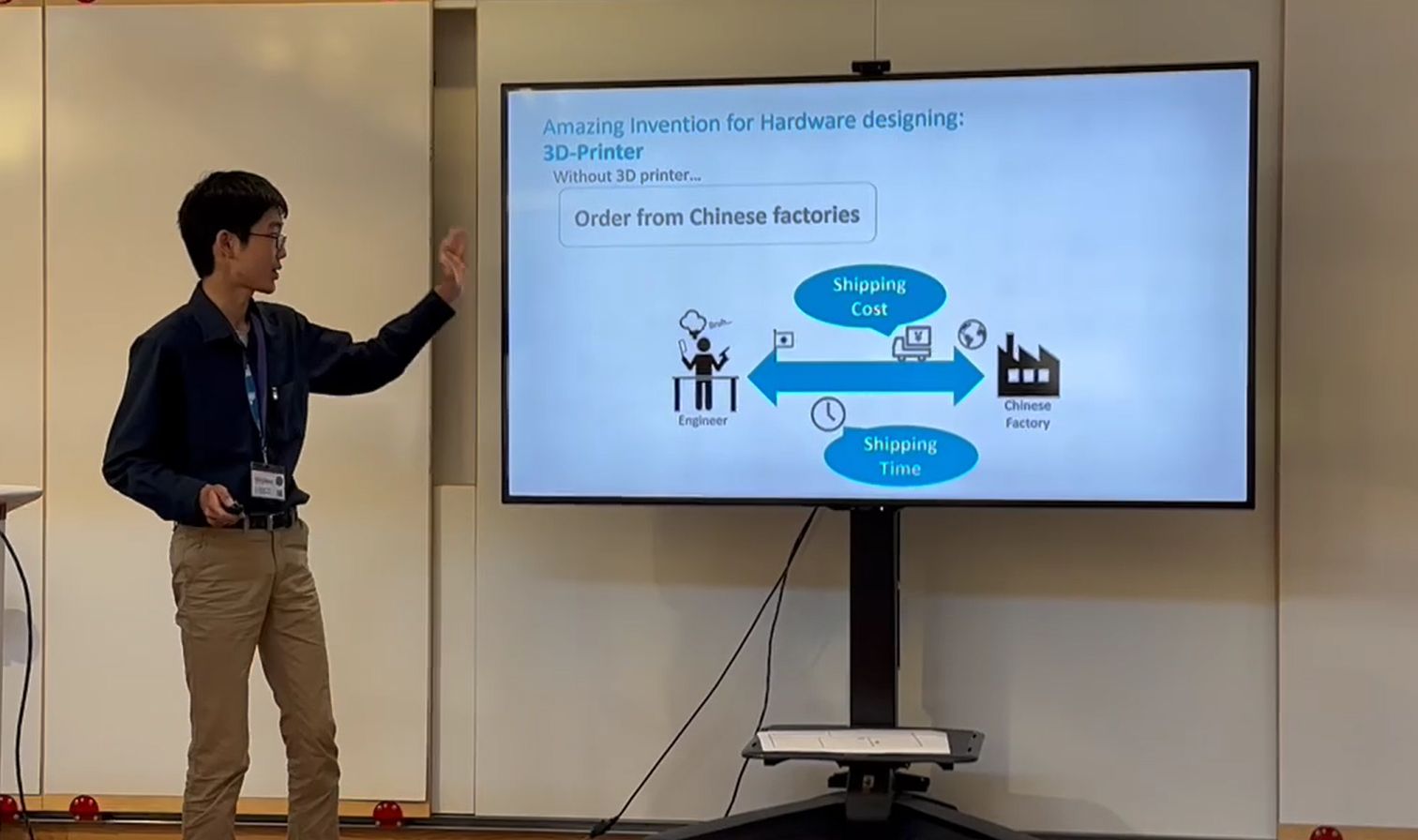 The opening of the pitch, explaining Alnilam with a 3D printer analogy
 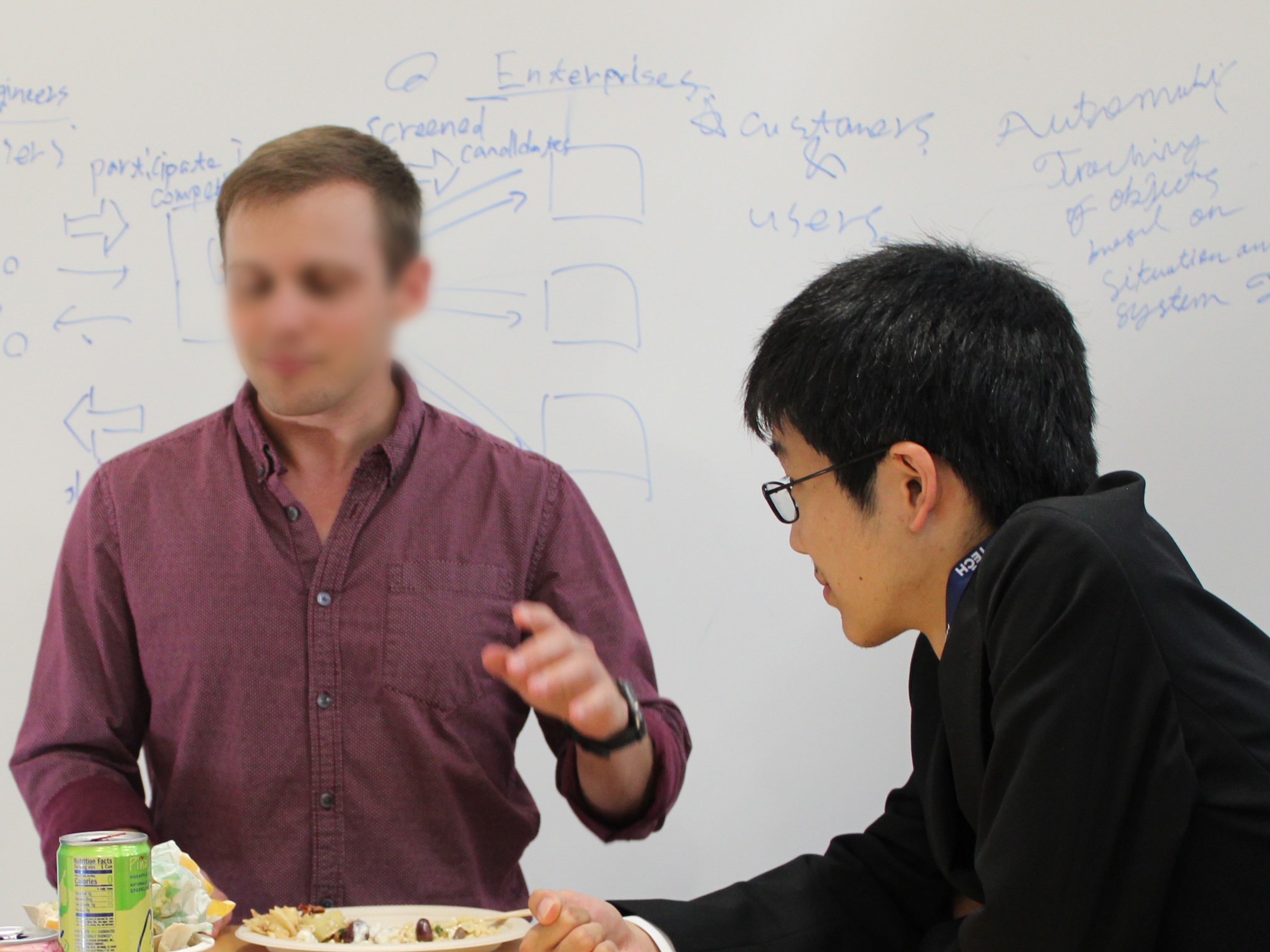 An exercise discussing business models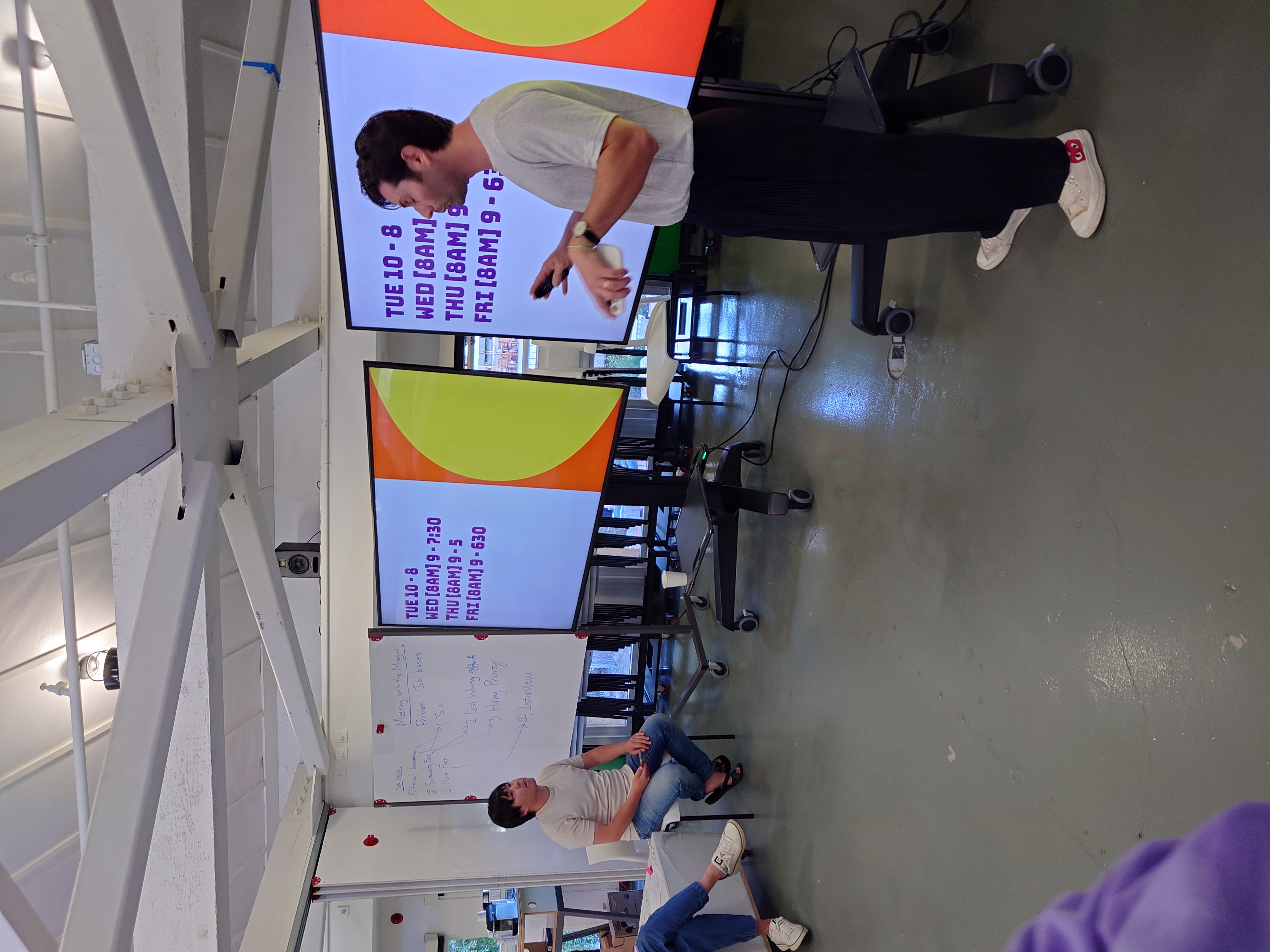
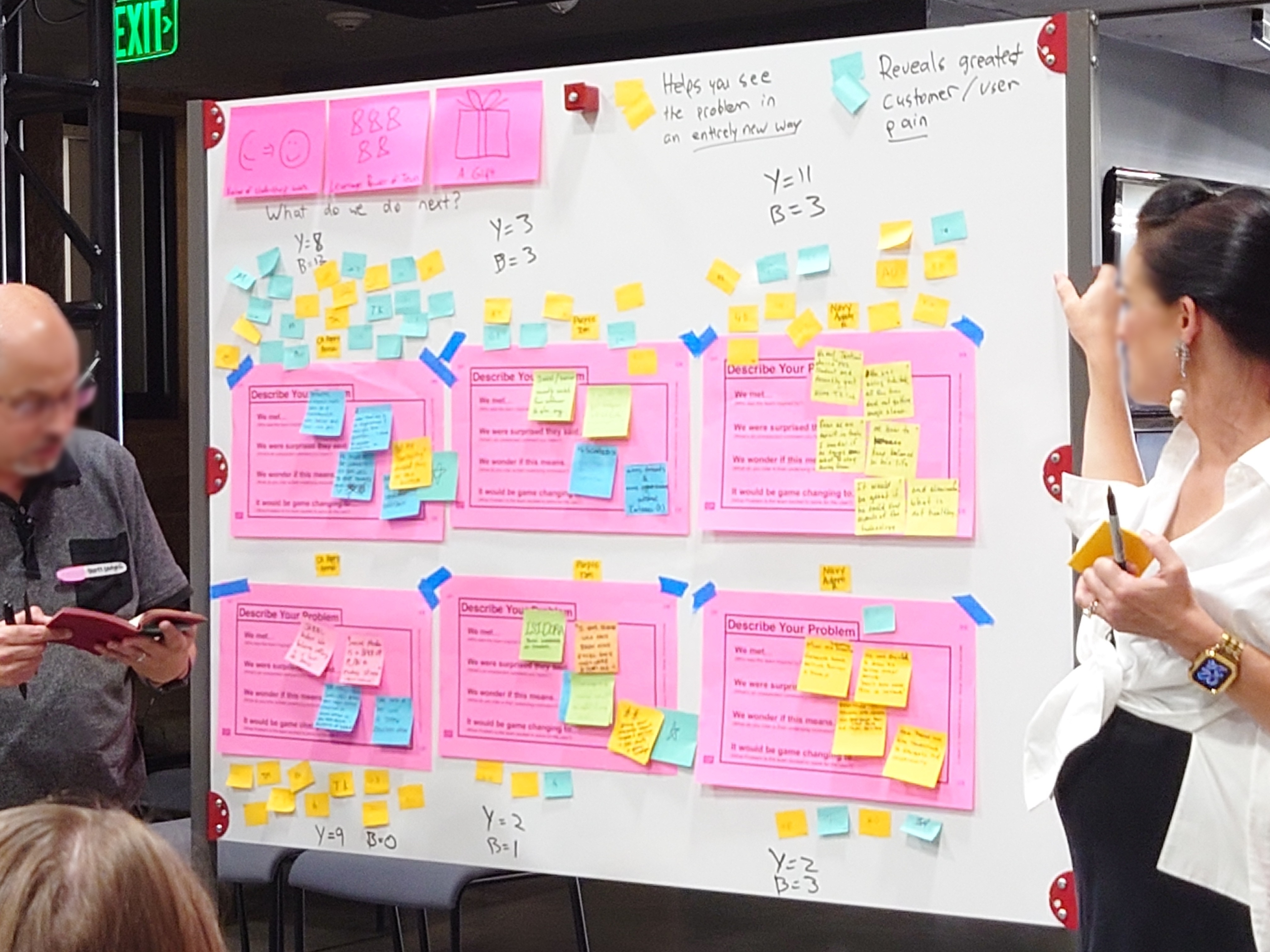 With the participants and instructors of the 44th d.school Design Thinking Bootcamp
I took the d.school Design Thinking Bootcamp in the middle of the program. Fixing whose problem you are solving, and which problem, before you start building is a way of thinking that stands on completely different ground from the design process taught in Japan. The exercises drilled this way of thinking into us thoroughly, and I completed the bootcamp.
The encounter that became a turning point
Through this program I met the person who would later co-found Cocoreach Inc. with me, now its CEO. What I gained from the lectures and exercises, and the connection I made here, have shaped my life since then with equal weight.
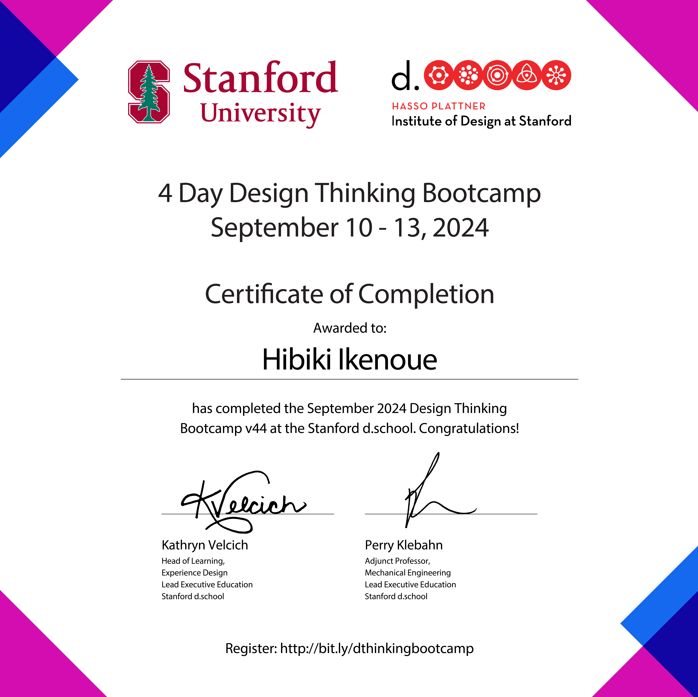 Certificate of completion for the Stanford d.school Design Thinking Bootcamp
I came away with three things: a pattern for business design that runs hypothesis testing fast, the nerve to talk about technology and business in one breath in English, and the connection with the person who would become my co-founder. Until these three weeks I had thought mostly about whether I could build a thing; here, the habit of deciding first who I am building it for finally took hold.