Mintaka
An autonomous robot that set the youngest-ever record at Tsukuba Challenge 2022 as a high school team
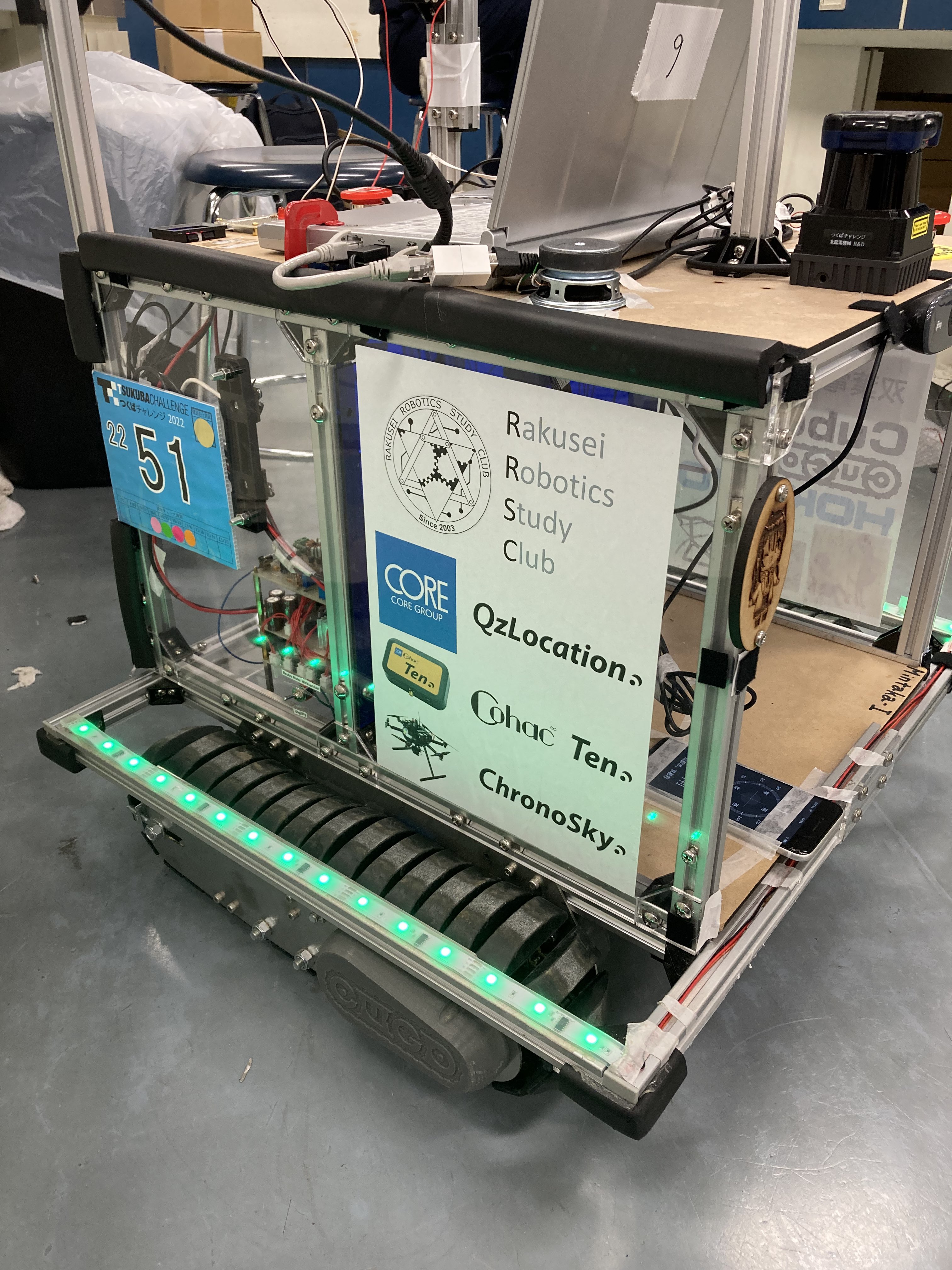
- Tsukuba Challenge 2022: passed the confirmation section (youngest-ever record, as high school students)
- Invited as guest speakers at the Tsukuba Challenge symposium
Overview
An outdoor robot built by our high school team for the Tsukuba Challenge, a technical challenge in which robots drive autonomously through the streets of Tsukuba City. As development leader I directed everything from building the machine to negotiating sponsorships with companies and shipping the robot from Kyoto to the venue, and the team passed the confirmation section as the youngest participants in the event’s history, while still in high school.
Why we entered
After winning the national title and the world championship with Bellatrix, the next goal was obvious. Winning on a well-prepared competition field is one thing; a robot that cannot drive in a real environment, with pedestrians passing by and weather that changes, will never become a robot that rescues people at disaster sites. In the spring of my second year of high school, I decided to enter the Tsukuba Challenge, where the real environment itself is the problem to solve, and started development of Mintaka.
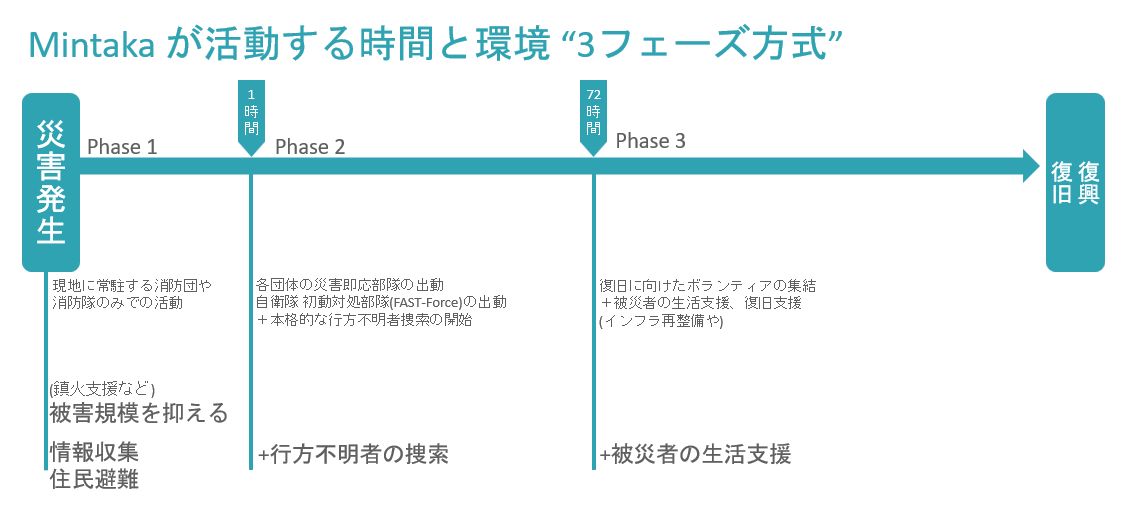 The 'three-phase' concept, organized along the timeline following a disaster
We conceived the machine as a general-purpose disaster support robot: swap the modules and it can handle earthquakes, floods, or snow removal.
The robot we developed
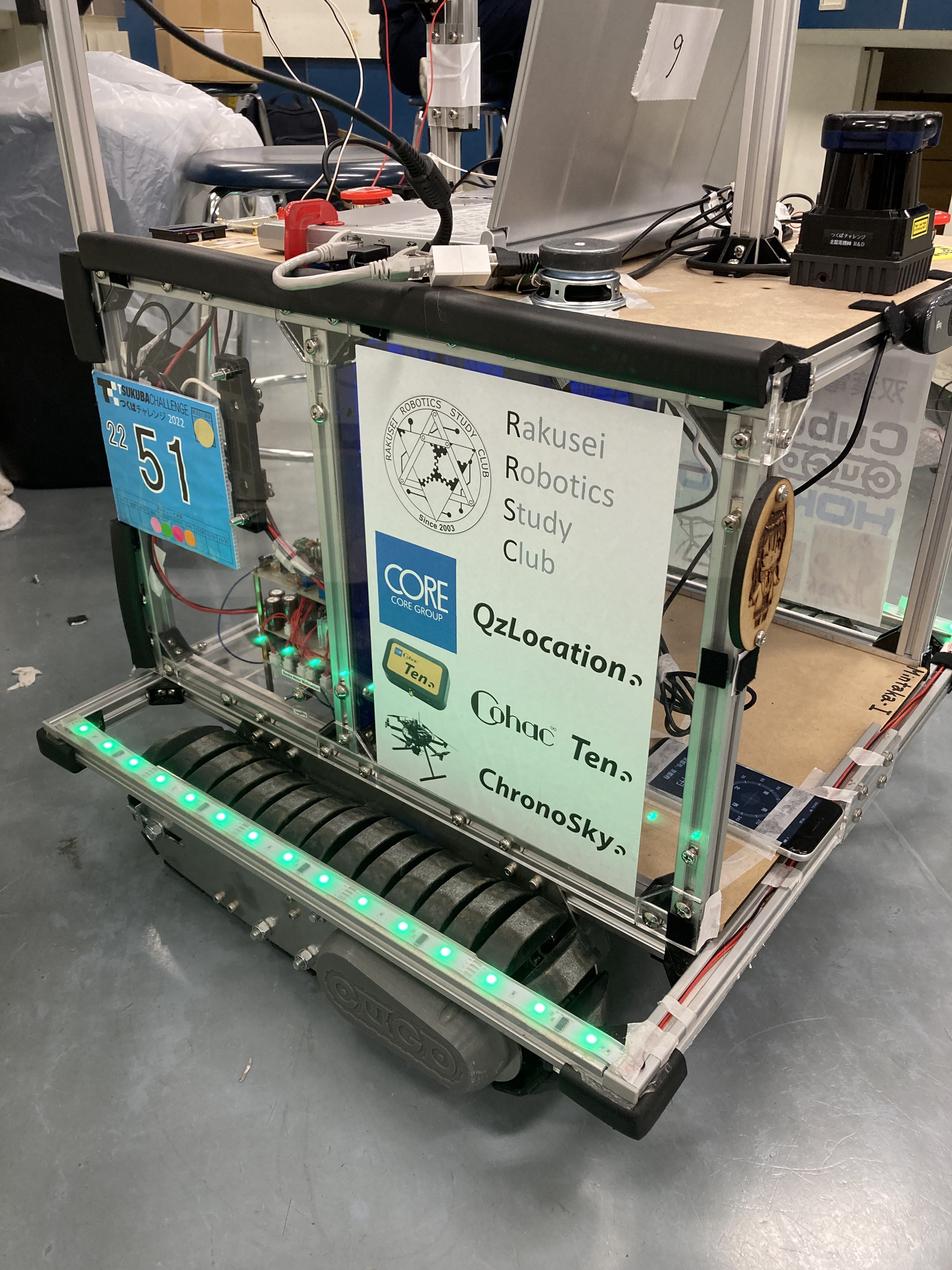 Mintaka-Ⅰ at the competition venue, with CuGo crawlers and homemade electronics
Localization used GNSS-RTK and an IMU, and a Hokuyo UTM-30 LiDAR handled obstacle detection. For traffic signal recognition, we trained YOLOv5 on a dataset we built ourselves. High-level control was written in Python, the crawler drivetrain was driven by an STM32 and an Arduino, and we made both the power boards and the motor drivers ourselves.
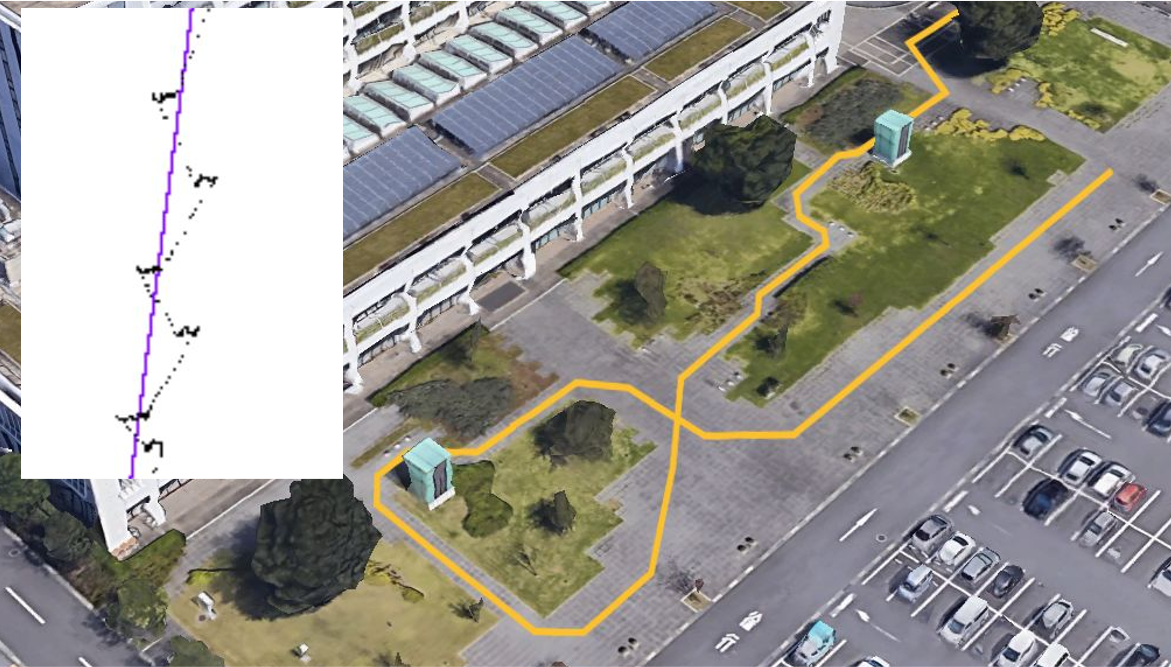 The driving route on Google Earth, and localization visualized from LiDAR point clouds
For the sake of our own learning, we also chose to use no ROS at all. Rather than lean on ready-made frameworks, we implemented both localization and path following with our own hands. Operation, on the other hand, we kept simple: we built a system where you draw a line in Google Earth and the robot follows that line automatically.
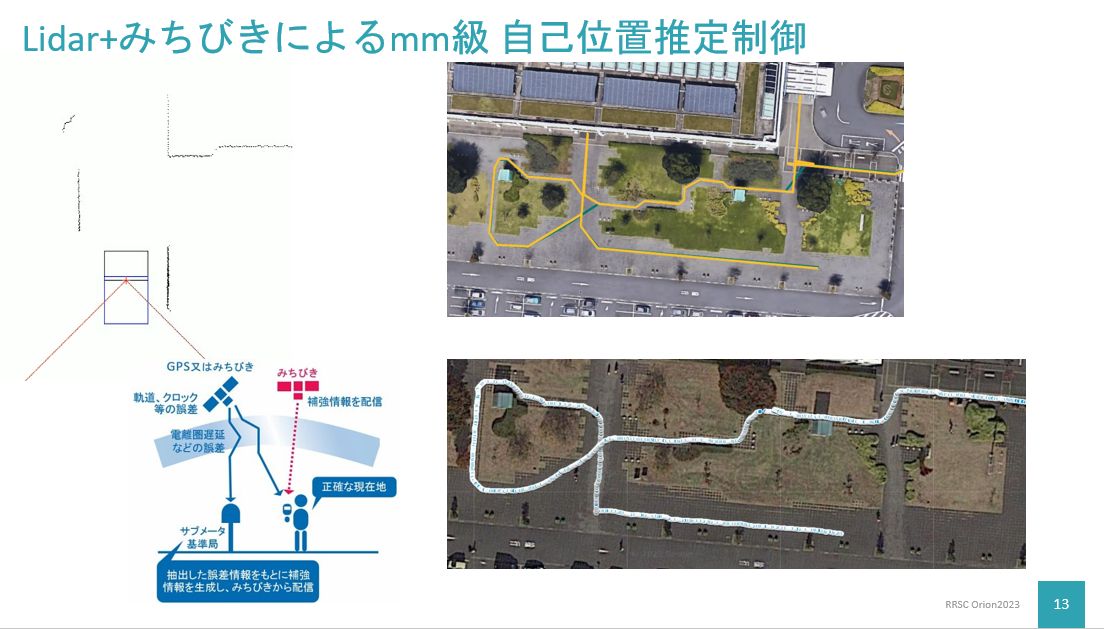 How localization works with LiDAR and the Michibiki satellites
 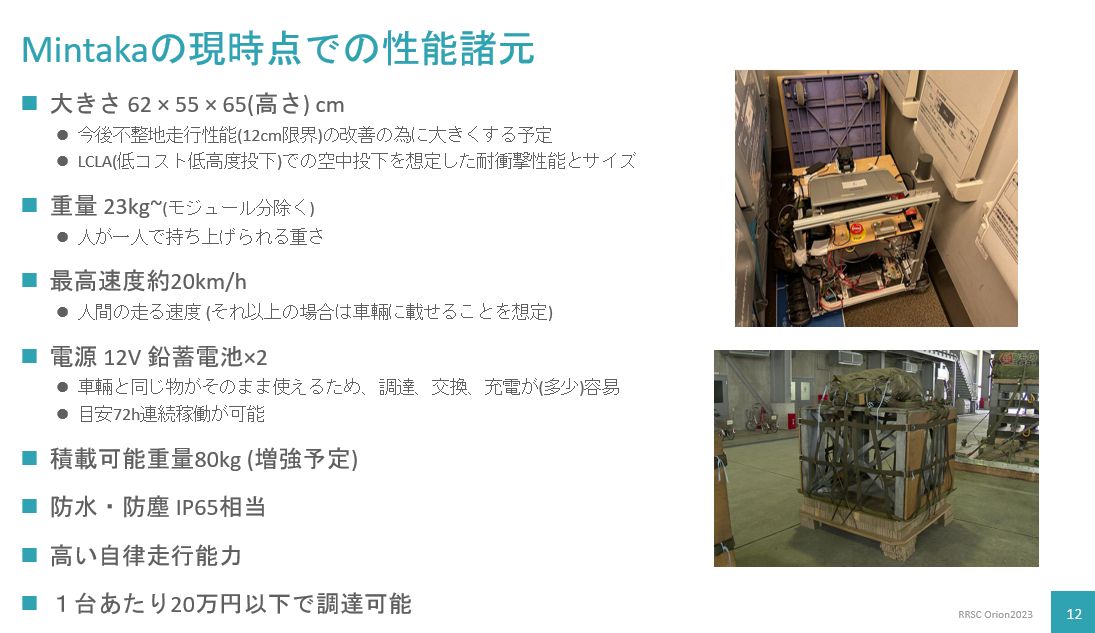 Mintaka's specifications
 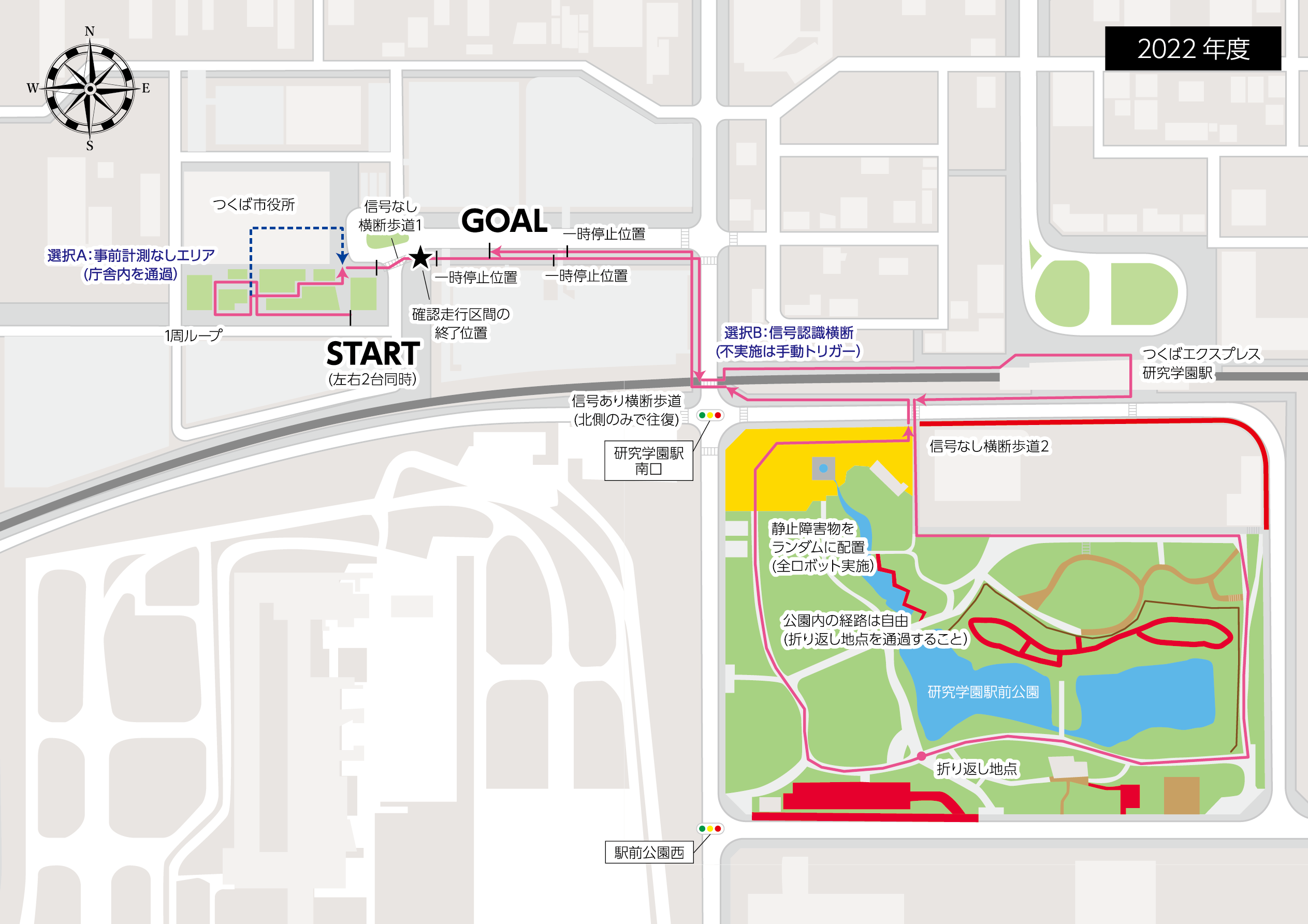 Course map showing the tasks set by the competition (from official materials)
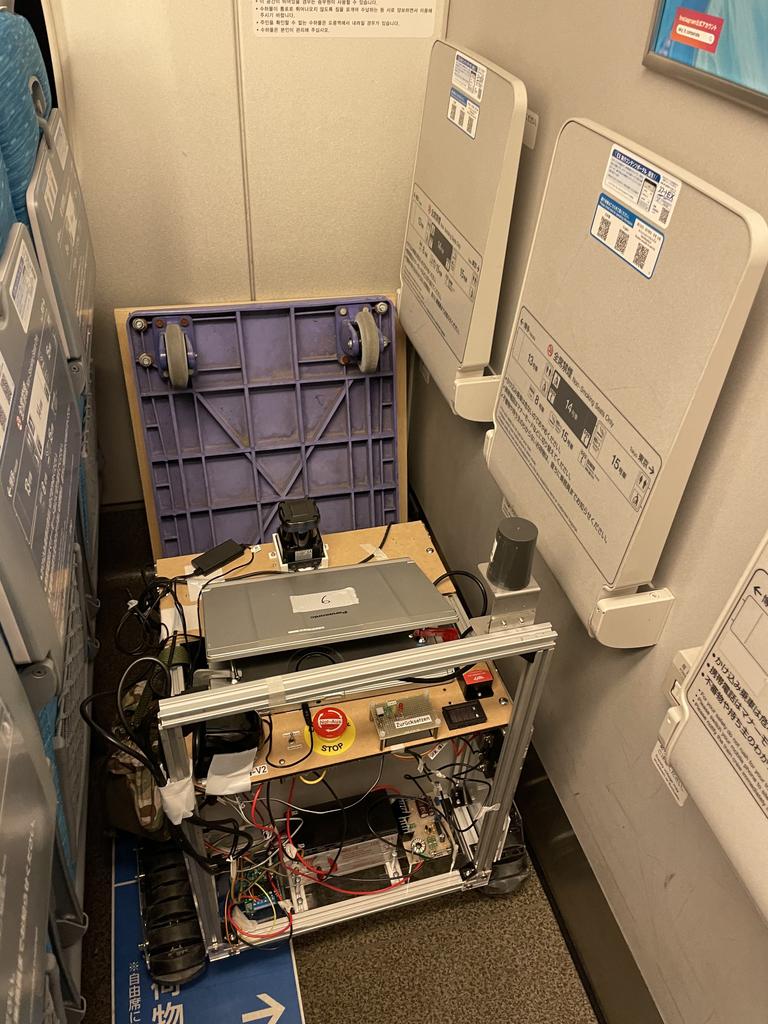 We carried the large machine to the venue ourselves by Shinkansen
Money was a harder problem than the technology. Millimeter-class LiDARs and RTK positioning services are not things a high school club budget can cover. I contacted every company I could and spent my days explaining why high school students were attempting this. It paid off: we received support from many companies and services, starting with Cuborex, which provided excellent crawlers with aluminum frames, and Cohac, which sold centimeter-class positioning sensors on the Michibiki L6 band, state-of-the-art equipment at the time. We also handled every task outside development ourselves, down to arranging transport of the large machine from Kyoto to the venue in the Kanto region.
Results and what came after
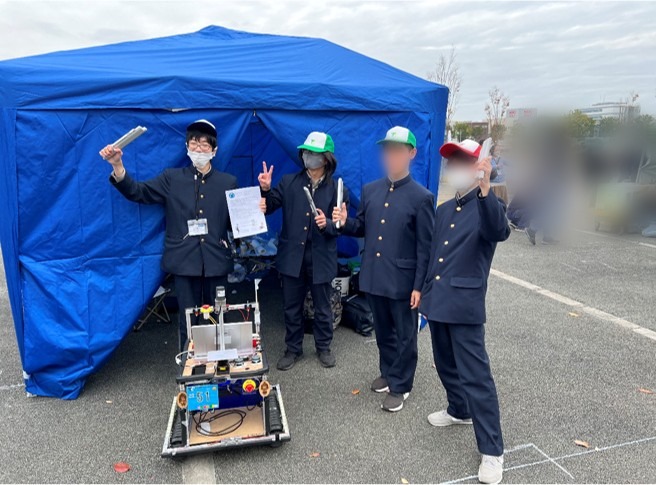 The team with Mintaka at the Tsukuba Challenge venue
At the 2022 event, the team set the record as the youngest ever to pass the confirmation section, doing it as high school students. We were also invited to give a guest lecture at the symposium, where researchers from universities and companies gather.
In 2023, to confirm what disaster sites truly need, I reached out on my own to defense officials with extensive experience working at disaster sites. I proposed a disaster response scheme built on Mintaka and received their assessment of the modular machine configuration. The effort that began with an earthquake had reached the people who actually carry out disaster response.
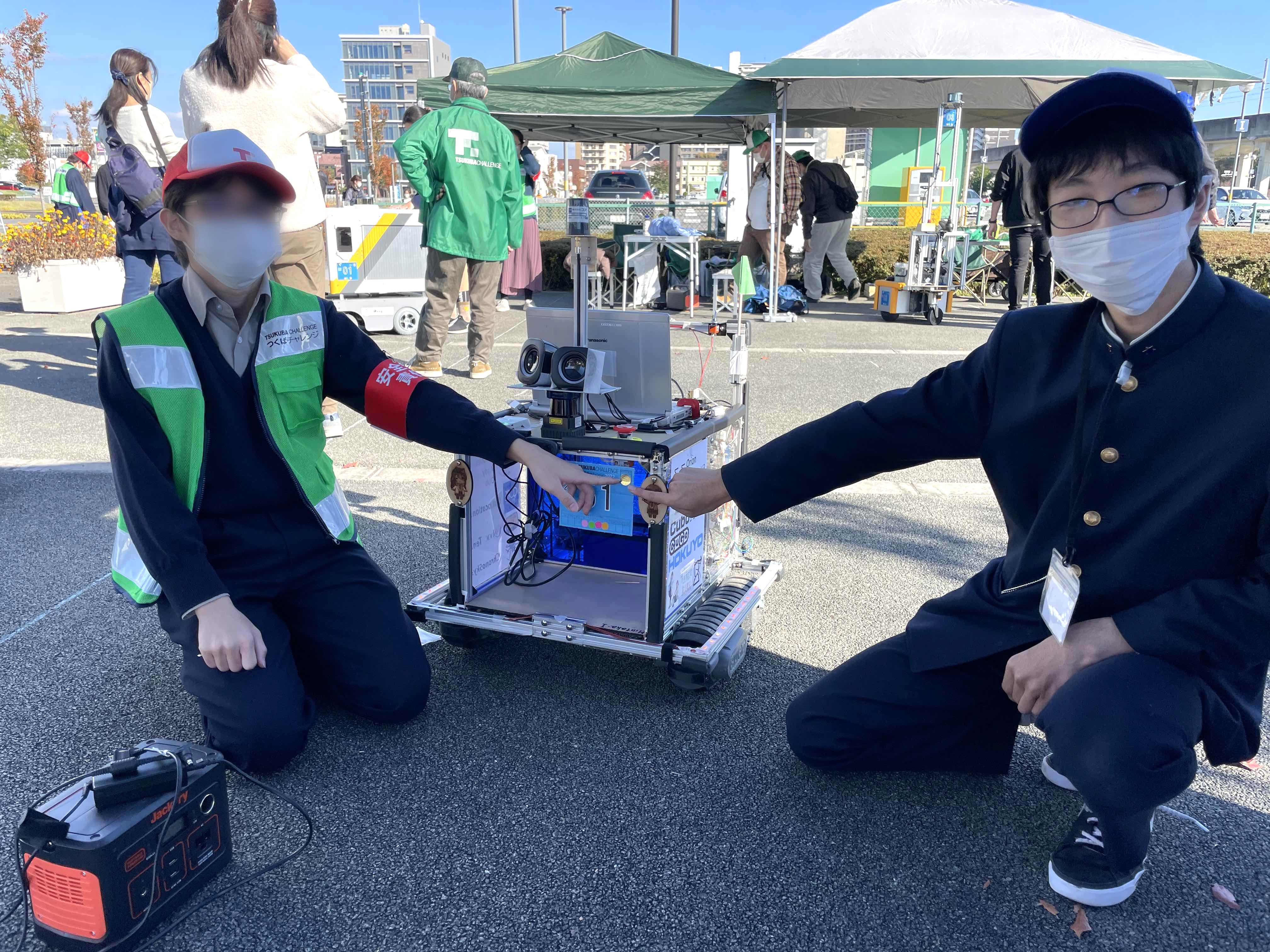 With the robot after completing the confirmation run at the Tsukuba Challenge venue
 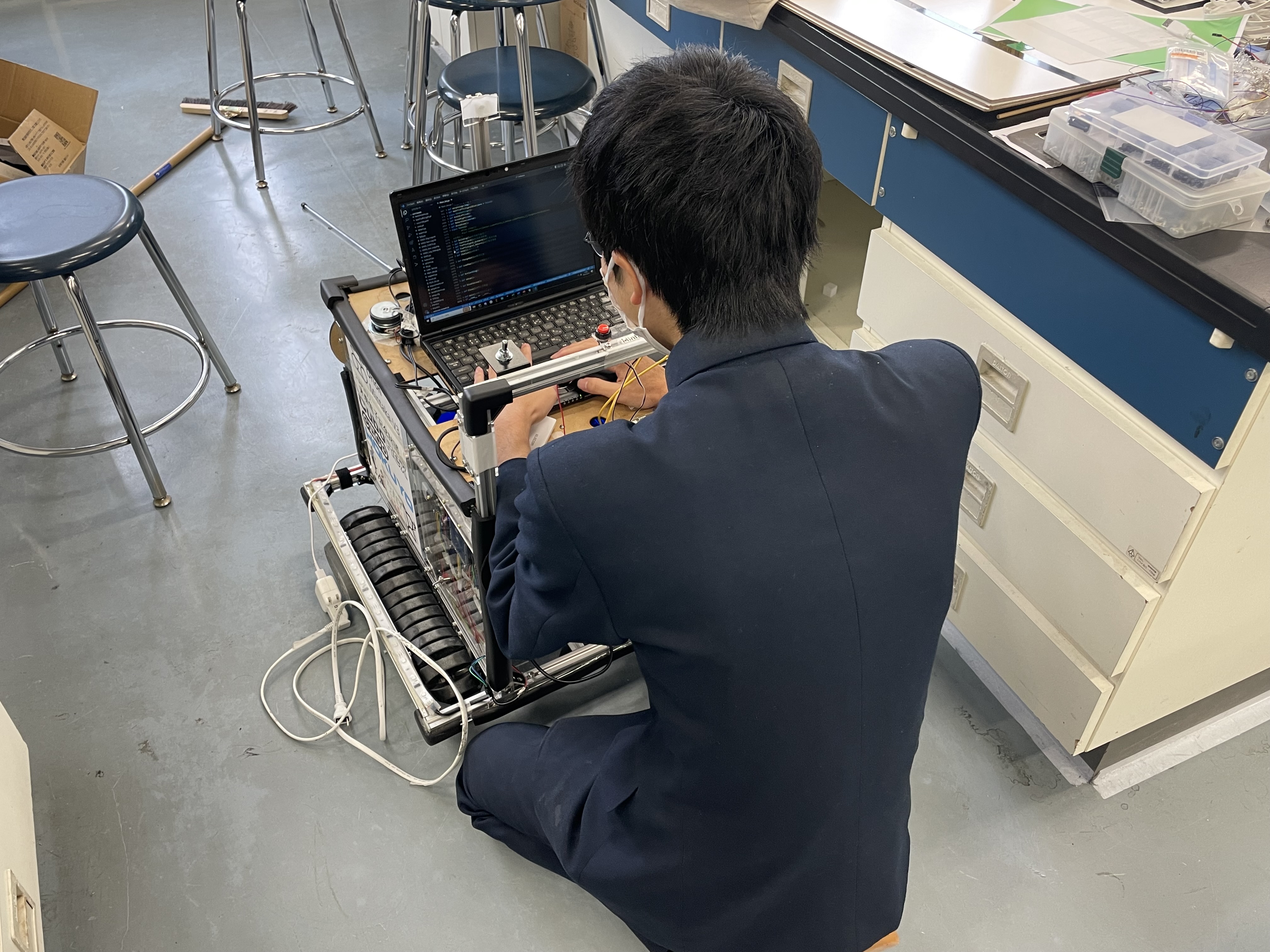 Development and debugging in the lab
Mintaka left us more than technologies like localization and LiDAR. I learned to run a development project end to end: going out to persuade companies when funds ran short, planning that covered everything down to transport, keeping a large team on schedule, and a verification approach of repeatedly breaking and repairing the machine in the real environment. All of it feeds directly into how I run my company and build products today.