Bellatrix
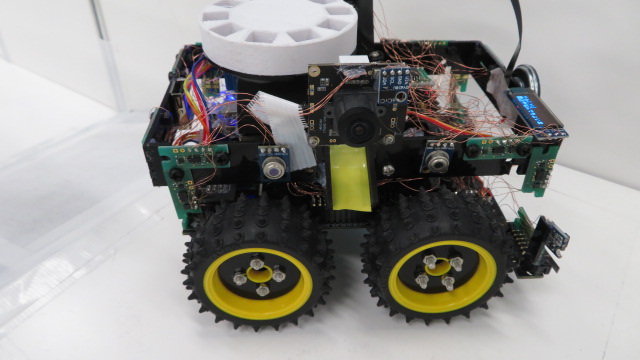
A Rescue Maze robot, developed entirely from scratch, that won the world championship
- RoboCupJunior 2021 Rescue Maze national championship: 1st place
- RoboCupJunior 2021 national championship: Hardware Award and Software Award
- RoboCupJunior 2021 world championship: SuperTeam 1st place
- RoboCupJunior 2022 Rescue Maze national championship: 2nd place
Overview
A competition robot for the RoboCupJunior Rescue Maze league. It autonomously navigates a maze modeled on a disaster site, finds victims placed as heat sources, and delivers rescue kits to them. Under a strict policy of using no commercial kits, we kept developing it from generation Ⅳ through generation Ⅹ, winning the national championship and the world SuperTeam title in 2021 and finishing national runner-up in 2022.
Origins
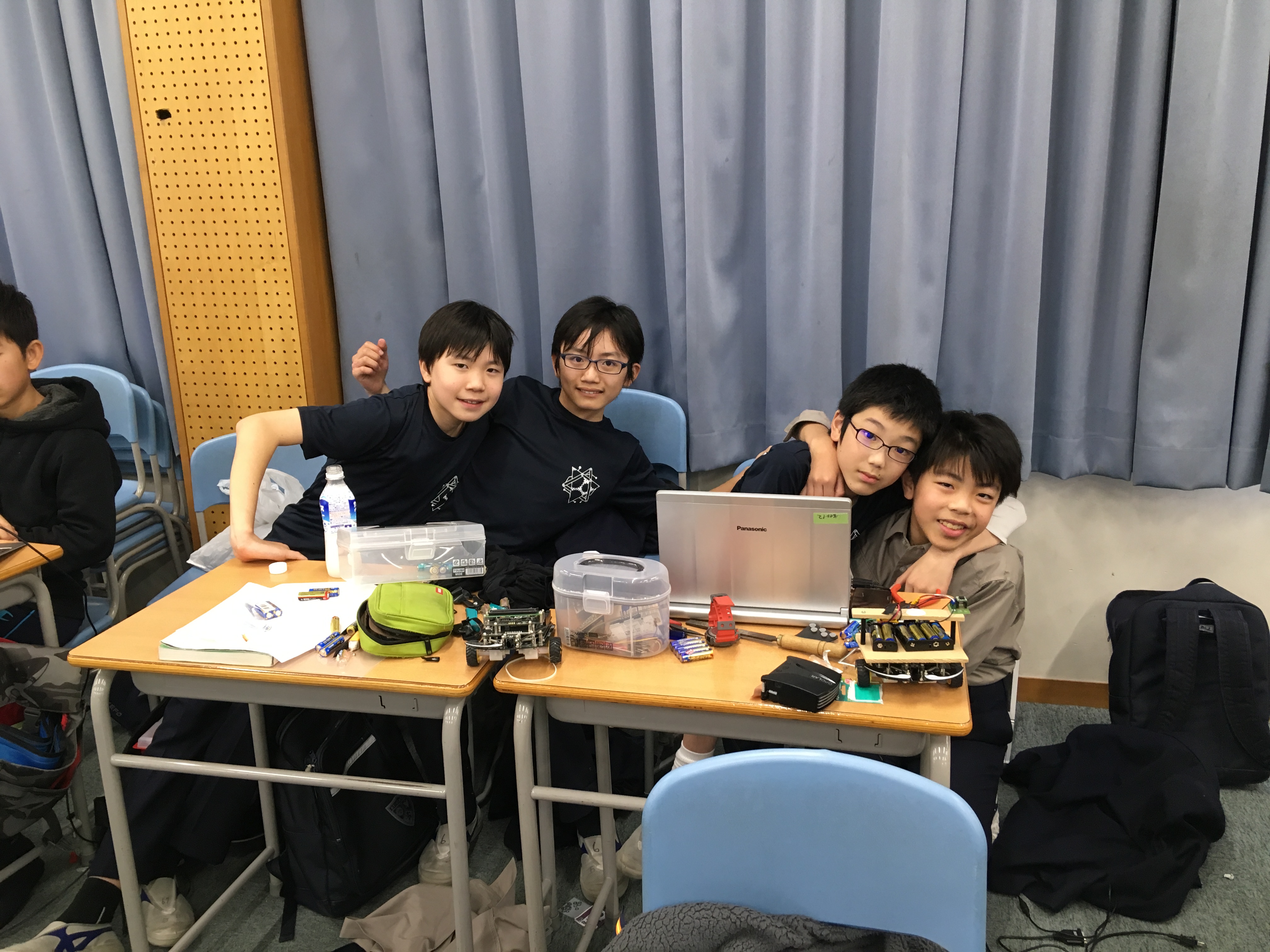 The founding members of Team Orion
As a child in Sapporo, I lived through the Great East Japan Earthquake. Learning that robots were working in the disaster areas drew me to engineering, and after entering junior high school I formed Team Orion in the robotics research club. We first competed in the Soccer league, but returned to our original motivation of building robots that rescue people at disaster sites and switched to the Rescue Maze league. That is where the development of Bellatrix began.
The robot we built
We held to a policy of designing everything ourselves: mechanics, circuits, and software. Adopting a proven commercial kit would have made winning easy, but we would have learned nothing about design. Under the motto “strong humans over strong robots,” we deliberately took the long way around.
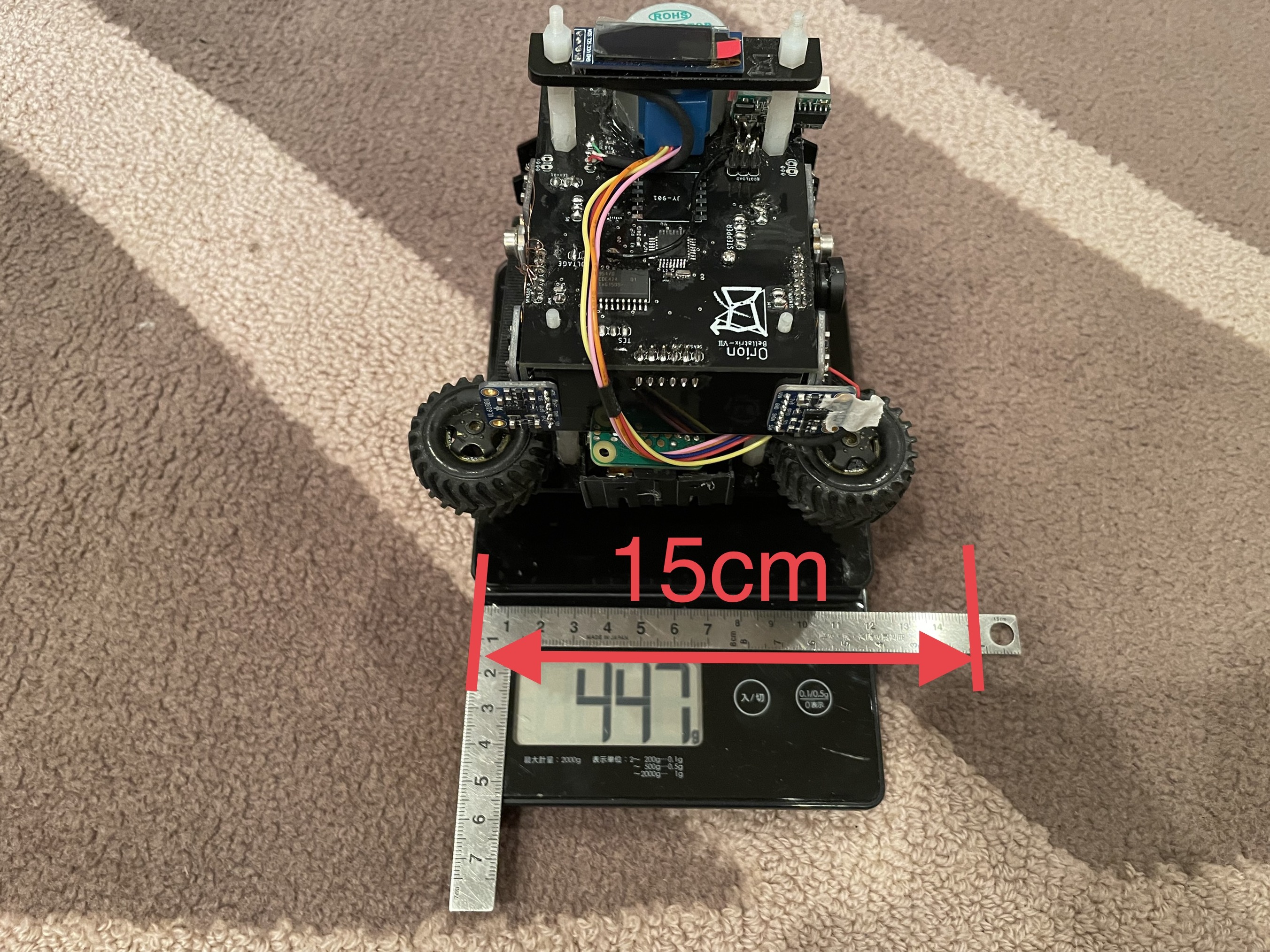 Measuring the dimensions and weight of Bellatrix-Ⅶ, downsized to 15 cm wide and 447 g
The chassis was designed in Autodesk Inventor and fabricated with a laser cutter and 3D printers. Generation Ⅶ came down to 15 cm in width and 447 g, and that machine earned the hardware award. We designed the circuit boards in Eagle and built everything from the sensor boards to the main board ourselves. Control was implemented in C on an STM32, with an Arduino and the STM32 working together to handle maze exploration and sensor fusion.
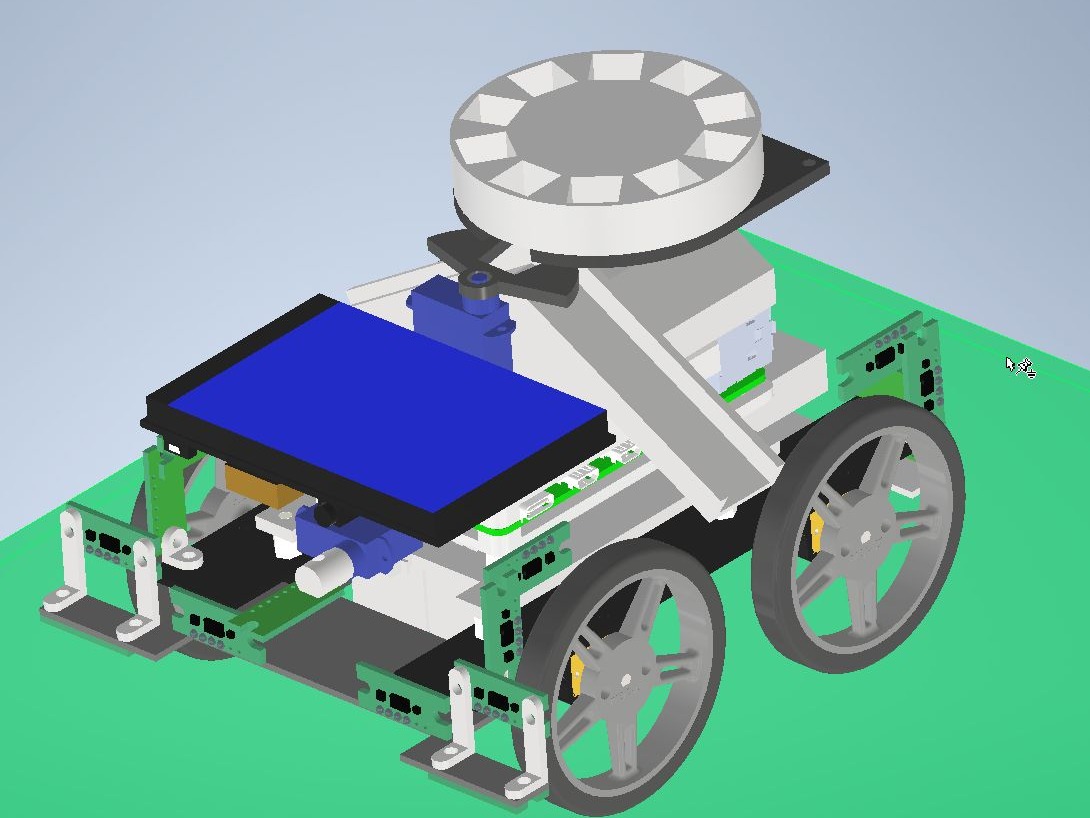 CAD model of the robot Fitted with a camera and ToF sensors
 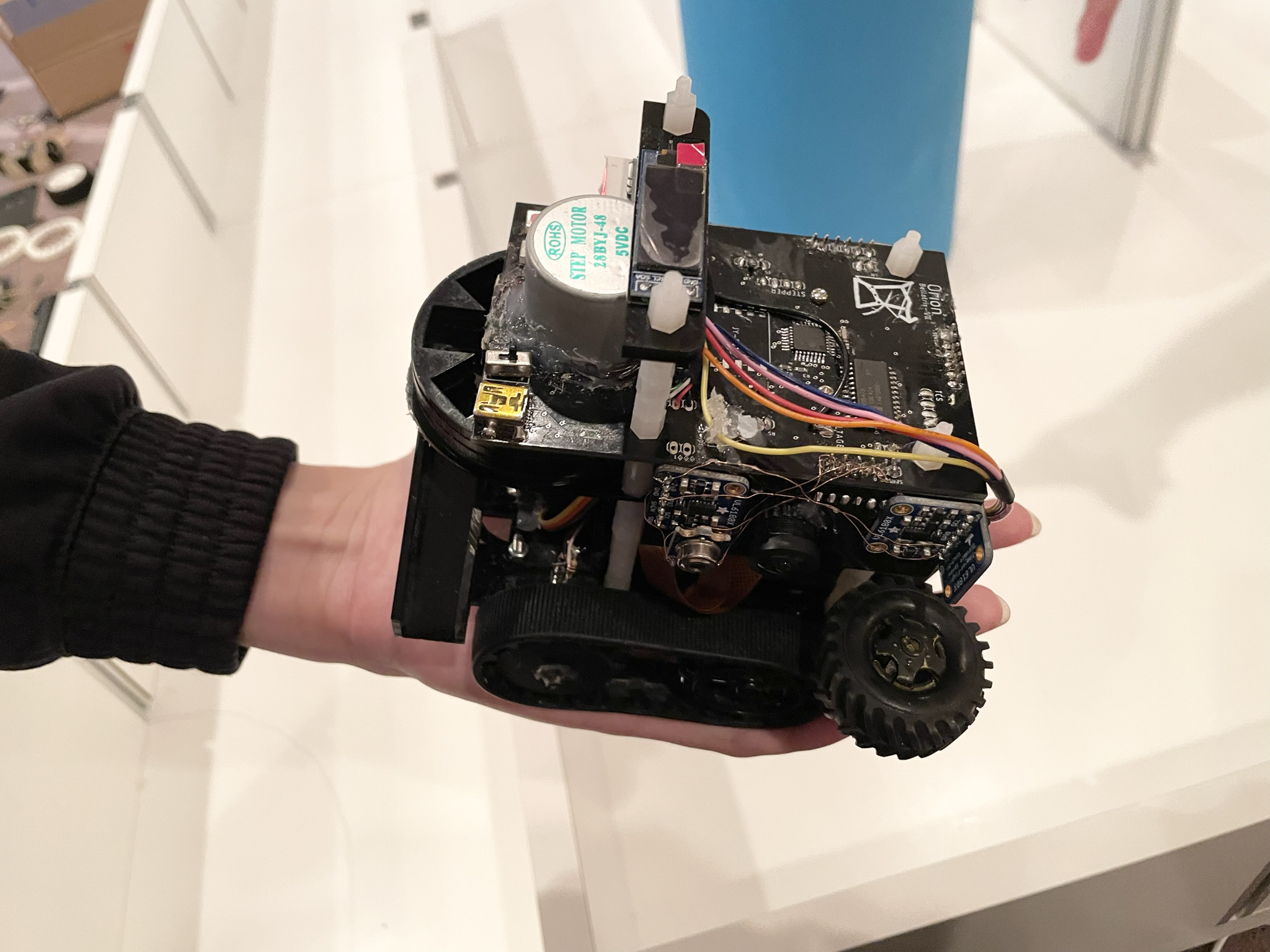 The palm-sized generation Ⅶ machine
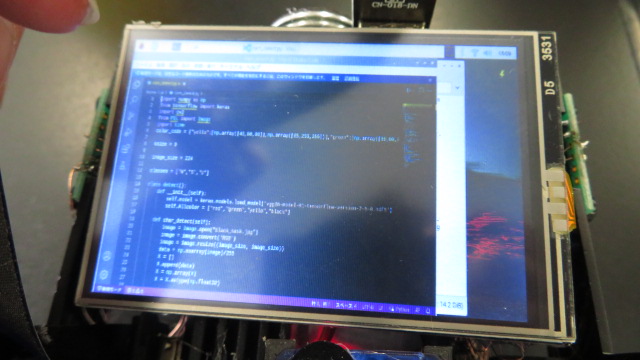 Software under development, shown on the robot's LCD
For recognizing victim markers, we developed our own image recognition model. The competition rules prohibit external communication from the robot, so inference has to run entirely on board. We built a lightweight TensorFlow Lite model based on U-Net, small enough to run inference on small computers like the Raspberry Pi 4 and Raspberry Pi Zero. This image recognition is what earned the software award.
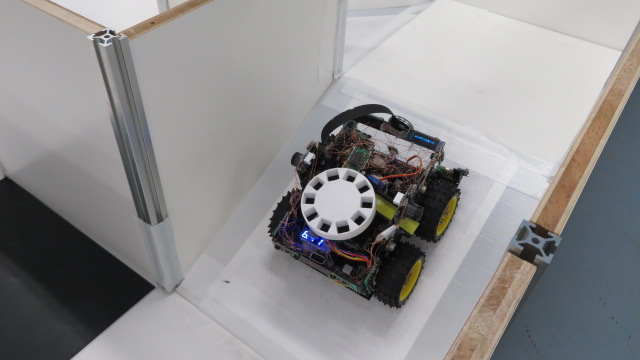 The robot running on the competition field
 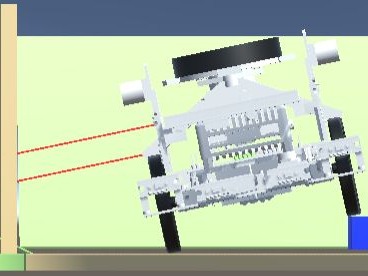 Driving simulation in Unity
 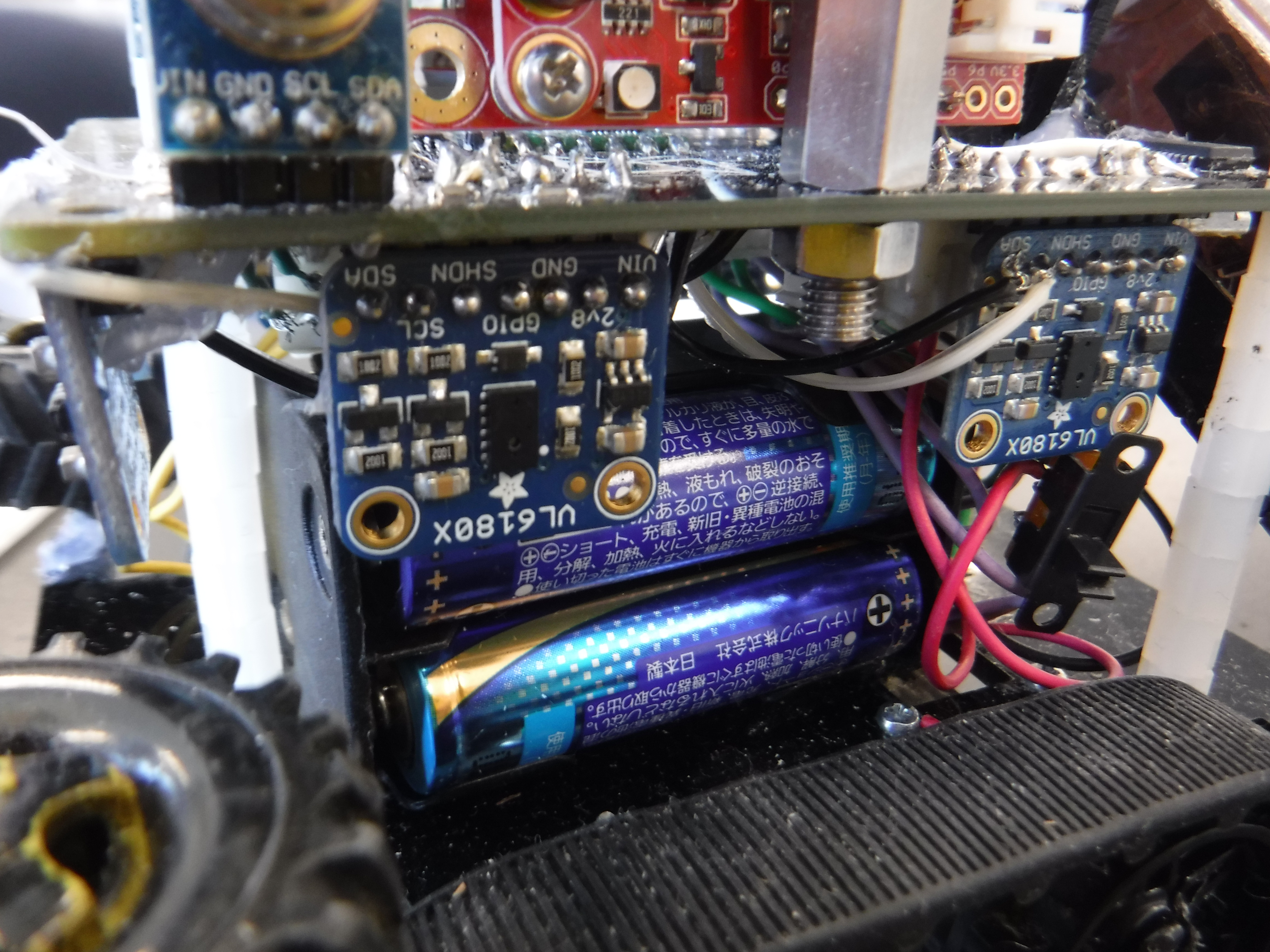 Inside the robot: ranging sensor boards and the crawler drive
Competition results
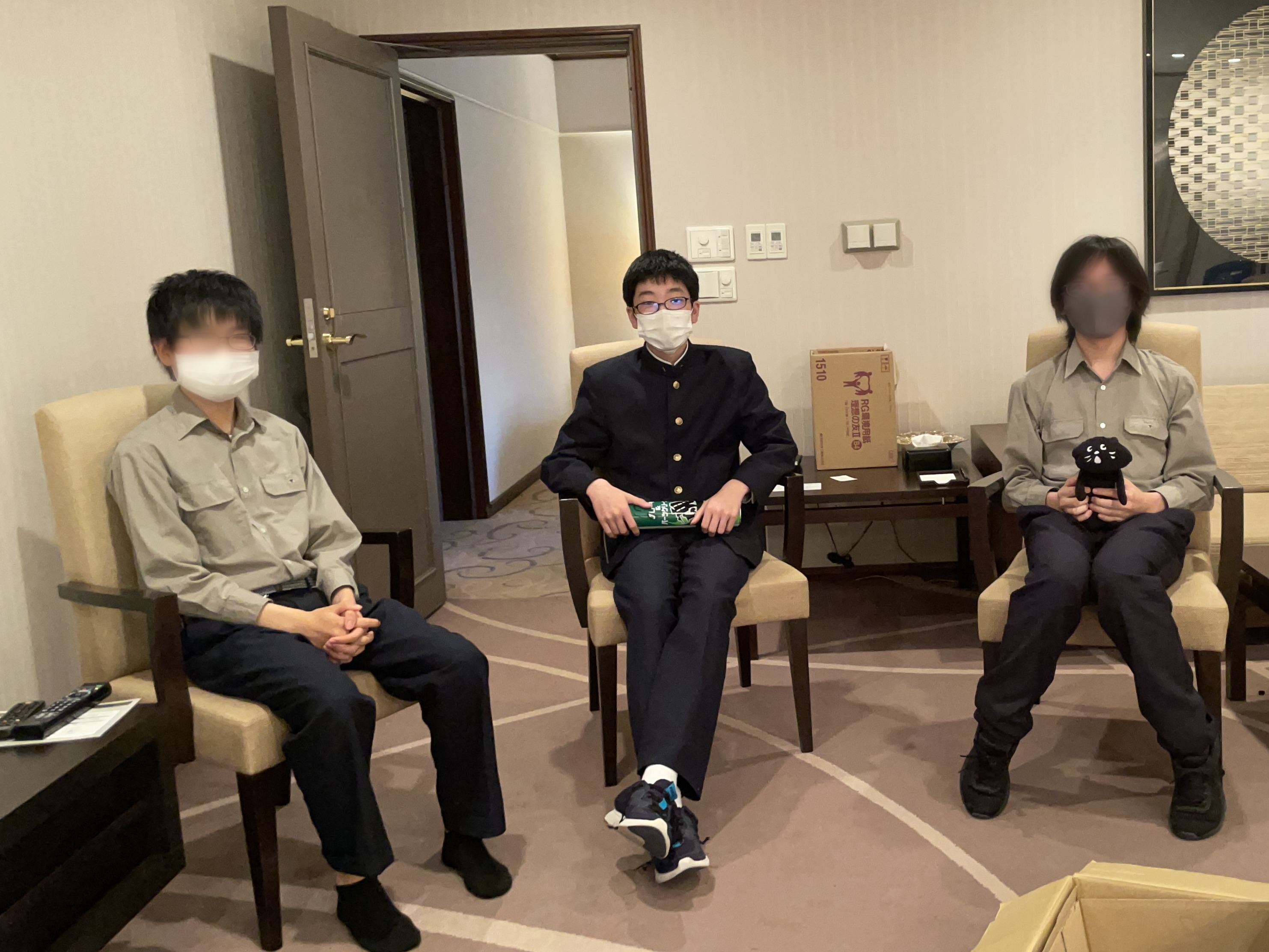 Team Orion traveling to a competition
In 2021, we won the national championship in the Rescue Maze league at the RoboCupJunior Japan Open. On top of that, we received both the hardware award and the software award.
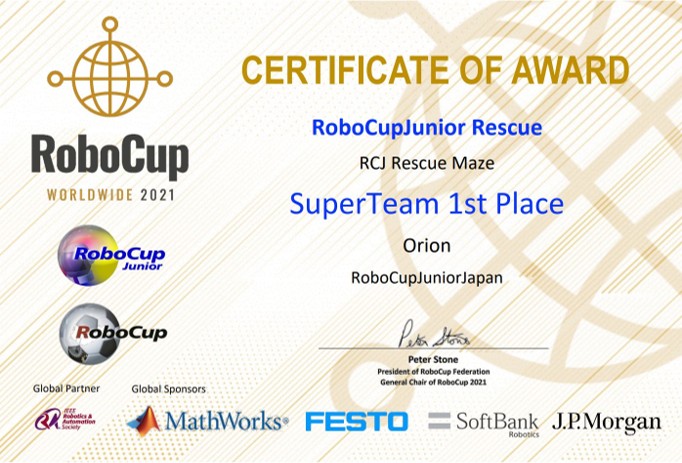 The certificate for RoboCupJunior Rescue Maze SuperTeam 1st Place
That year’s world championship was held online in a SuperTeam format: representatives from three countries formed a joint team and had three days to adapt to rule changes. Representing Japan, we teamed up with squads from Germany and Russia, coordinated across time zones, built a system to control a robot on the other side of the planet in real time, and won. The discovery that broken English is enough to communicate as long as you have diagrams and working code is one I would recall many times in later ventures abroad.
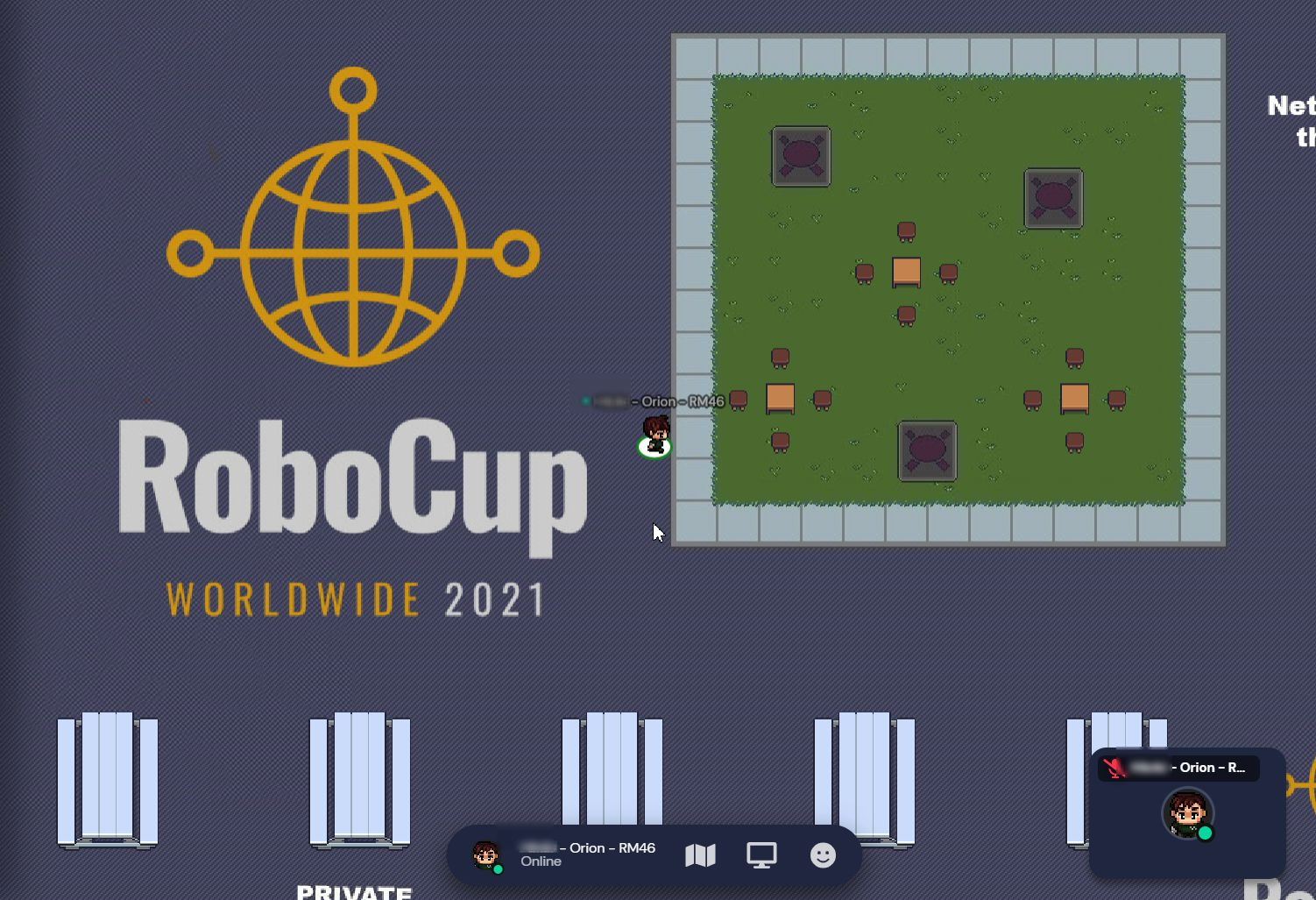 The venue of the world championship, held online
The following year, 2022, the successor machine finished national runner-up. The autonomous navigation skills built here carried over to Mintaka, which drives outdoors in the Tsukuba Challenge.